Good News for the Endangered Basra Reed Warbler
Birdlife International has announced the discovery of breeding Basrah Reed Warblers far out of the known breeding areas of Iraq and Iran. 4 birds including a recently fledged juvenile were found in Israel's Hula Valley in June 2006. A newly discovered disjunct population would be great news for this ICUN Red-listed species. The revegetation of the southern marshes of Iraq also bode well for this small songbird whose population may have dropped up to 80% since the early 1970's. In Iraq the bird has been found in reed-filled marshes and riverbanks from Baghdad to the Shatt Al-Arab marshes in the south. In 1981 a survey reported breeding birds in the Jadriyah section of Baghdad right across the river from the Green Zone. The birds might survive in small patches in greater Baghdad, though the original site now has been significantly degraded. The stronghold remains the lower Mesopotamian marshes.
Tuesday, July 11, 2006
Iraq Natural History References and Iraq Fauna Wiki
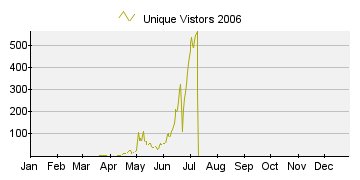
I wish I knew what was happening at my other site Iraqfauna.wikispaces.com. The unique visitors are going through the roof! My hope is that it will be used primarily by Iraqis to share information on the country's animal biodiversity. So far I've been the only editor, so its not living up to its potential as a collaborative site. I have been working on the Iraq bird list and slowly adding Arabic names and links to both species photos and range maps, where available.
I've also added more links for people to explore. I'll copy them here to give them a wider audience. Remember anyone can edit the Iraqfauna wiki and add to it. All previous versions are saved so don't worry about wrecking anything.
------------------------------------------------------------------------------------------------
Iraq Natural History Links from iraqfauna.wikispaces.com
INVERTEBRATES
Longhorn Beetles (Cerambycidae) of the Western Palearctic - Michal Hoskovek and Martin Rejzek of the Czech Republic have compiled an illustrated list of the hundreds of species of this large and economically important group of beetles. Their site also has field trip reports from Iran, Syria and Turkey. A very impressive site.
The Sphingidae of the Western Palearctic - Tony Pittaway's comprehensive site covering all the Hawkmoths of the region. Detailed species pages have photos of adults, caterpillars and sometimes parasitoids. An excellent resource.
Scorpions of Iraq - A pictorial introduction to the species of scorpions in Iraq by Norwegian scorpion researcher Jan Ove Rein.
FISH
FISHBASE - List of Fish of Iraq This incredible resource has over 1000 collaborators and has a huge amount of info on Iraqi Fish derived from their database. Info includes pictures, bibliography, collection data.
Freshwater Fishes of Iraq - A project of Brian W. Coad, a scientist at the Canadian Museum of Nature in Ottawa. In addition to a great picture of a large Tigris Salmon (Barbus esocinus), this site has the most authoritative species list, a list of Arabic fish names and a huge bibliography of over 1500 entries.
BIRDS
Laura Erikson's Birderblog - Iraq Species Gallery - A selection of bird photos taken in Iraq by US military and civilians sent to Laura Erikson who runs Birderblog.
Birding Babylon - Natural history notes from Iraq. Started in March 2004 when Jonathan Trouern-Trend deployed to Iraq with the US Army.
Birdlife International's Important Bird Areas in Iraq - Link to descriptions and map pages of areas identified as IBAs in Iraq.
Birds of the Western Palearctic - Maps for all the birds on the Western Palearctic list. Iraq is on the far eastern border of the region.
Birds of Kuwait - Part of Abdul-Rahman Al-Sirhan's fantastic site on the wildlife of Kuwait. He has spent the last few years photographing and documenting the fauna of Kuwait and has a large number of great photos. Most bird species found in Kuwait can also be found in parts of Iraq. Google's Arabic-English translation tool can be used read the Arabic parts of the website.
Environmental Organizations working in Iraq
Birdlife International
Canada-Iraq Marshlands Initiative
Eden Again/Iraq Nature
Iraq Nature Conservation Association
UN Environmental Program - Marshlands Project
Iraqi Marshlands Observation System - a collaborative project that uses satellite imagery and landcover analysis to document the restoration of the Mesopotamian Marshes in Southern Iraq. Includes weekly imagery. April 2006 - Marsh Vegetation at 58% of pre-drainage levels - In March 2003 the marshes were down to approximately 7% of historic levels.
Academic and Governmental Organizations
Ministry of Environment - English language website for the Iraqi Ministry of Environment in Baghdad.
University of Basrah Marine Science Center - An institution devoted to studying the study of the biology and environment of the southern Iraqi Marshes, the Shatt Al-Arab and the Arabian Gulf. Publishes a newsletter and the Journals Marina Mesopotamica and the Journal of Aquaculture.
Sunday, June 25, 2006
 Here's another critter people don't expect to see in Iraq, a Crested Porcupine (Hystrix indica). This large rodent can weigh up to 40 pounds. The photo was taken by Rocco Moschetti, a vector control specialist who worked in Iraq for 2 years. This porcupine wandered into a trap set for feral dogs at Al Asad Airbase in Al Anbar province. Other interesting animals he caught included jungle cat and striped hyena.
Another birder is now active at the Camp Victory complex near the Baghdad International Airport. John is an Air Force Officer on a 4 month rotation, which should get him into the best times for fall shorebirds, landbirds and waterfowl. John has written about some of the birds he's seen at his blog and he's started a yahoo group called Operation Iraq Birds where he'll be posting some of his pictures. He's at least the fifth resident of the base complex who has been a serious birder. I was only a visitor, but I did see some great birds on base.
Two of his predecessors LTC Bob and Joe H from Alaska both compiled impressive lists within the confines of the few interconnected bases. The variety of habitats from large lakes, reed-lined canals, scrub and mudflats add to the bird diversity.
Laura Erickson at Birderblog is still getting photos of birds from people stationed in Iraq. She's accumulated quite a gallery that is worth checking out.
Saturday, June 03, 2006
Today I found an announcement of the designation of the first wildlife refuge that I've heard of in Iraq. The Assafia Wildlife Sanctuary is located in the Al-Hawizah Marsh between Basrah and Amara near the Iranian border in the south of the country. This marsh was essentially the only part of the mesopotamian marshes that survived the draining in the 1980's and 90's. The fact that the marsh also received water from a river in Iran probably saved it from the fate of the central marshlands. By 2000 Al-Hawizah was reduced to 35% of its 1970's levels. Since 2003, the marsh has started to expand again because of reflooding. A dike being built on the Iranian side of the marsh will probably have a negative impact on the marsh by diverting water coming from the Karkeh and Karun Rivers.
The Al-Hawizah Marsh was said to have one of the largest concentrations of wintering waterbirds in the world. It unknown the status today, but the marsh once held large numbers ofwintering Greylag Goose, Mallard, Gadwall, Eurasian Wigeon, Common Teal, Pintail, Northern Shoveler, Red-crested Pochard, Pochard, Tufted Duck, Greater Flamingo and Coot. Breeding birds include the Endangered Basra Reed Warbler, Grey Hypocolius and Iraq Babbler. Historically Goliath Heron, African Darter and Sacred Ibis were found in the marsh.
In February a meeting between the Basrah Marine Science Center and local government officials established a plan to manage the sanctuary including conducting a biological inventory and provide environmental education of people living near the sanctuary.
This is a big step. Iraq under the former regime had no real conservation infrastructure. The few conservation laws, such as countrywide bans on hunting, were ignored.
A recent paper entitled "Restoring the Garden of Eden: An ecological assessment of the marshes of Iraq" was published this past week in the Journal Bioscience. The paper documents the revival of some of the Mesopotamian marshes since the fall of the former regime in March of 2003.
Thursday, May 04, 2006
You may notice some format changes. Its the result of blogger crapping out when I was making a minor change to the template. I was left with no template and the backup was not too useful.
The book seems to be getting a lot of press, which is nice. Emily Gertz wrote a nice story about my time in Iraq and my ongoing interest in the region. The story is running in the current edition of Grist Magazine. I was interviewed today by the Baltimore Sun. On Saturday I am scheduled to be on CNN around 12:30.
I was very excited to see that google has a new Arabic/English translation program in Beta. The one I've used before was somewhat limited. Like the other translation programs that Google has, it will do a machine translation of a website on the fly. Depending on the language, you can often get a passable translation. I tried it on this site as well as the Iraq Fauna Wiki. I'm planning to use it to create an Arabic mirror. Like all Machine Translations the result will need work, but its a start. If nothing else it could produce some amusing reading for Arabic speakers. Currently it seems to work best for news and would not be recommended for poetry.
Subscribe to:
Posts (Atom)