I've taken a few walks around the perimeter here at my camp. There's still a few puddles around and the sand is still moist and looks like brown sugar.
This morning I saw a white wagtail feeding in the pebbles behind our shower. There were also a couple of house sparrows and a pair of rock doves.
Most of the camp is flat and sandy. Big sand berms surround the camp with little spiny bushes growing here and there. In some areas near the edge of the berm, new grass has sprouted up along with some small semisucculent plants.
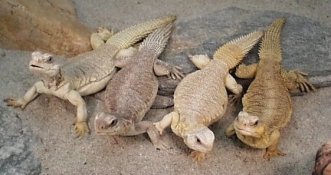
The ants are plentiful. I saw at least 4 species. The smallest were tiny black ants perhaps a millimeter long. The nests were grouped together like little volcanoes 2 inches across. The largest were big black harvester ants coming out of mounds 10 inches across. Plenty of food for a fat lizard. Last year about this time I caught a large Dhub-Dhub or Spiny-tailed Lizard on a rifle range north of here.
I found some good sized holes near the base of some spiny bushes. One had fresh rodent droppings. A few types of gerbils are native to this area so it might have been one of them.
I turned over a few large boards looking for insects and scorpions. I found a colony of small white termites eating up the underside of a board. I also found a couple black tenebrionid beetles hiding under debris and the empty puparium of a fly.
In an area with a lot of bushes and new grass I found two species of Wheatear. A Desert Wheatear flew just in front of me as a walked through, perching on bushes and pumping its tail up and down. On one of the berms I saw an Isabelline Wheatear.
Thursday, January 27, 2005
Yesterday was my last day in Iraq for this deployment. The last few days I walked around base quite a bit. Seeing my familiar favorite birds that I'll always remember when I think of Iraq. The residents like the playful white-cheeked bulbuls, the Crested Larks with no fear of people and the hooded crows, plus the winter visitors like the rooks and the ducks in the laundry pond.
The Moustached Warbler turned out to be the last lifer in Iraq.
I have been blessed with the opportunity to be here, doing a mission that I believe in. Because of my job and the places that I ended up I had, perhaps, more opportunity to see and appreciate Iraq's natural world than some. One day I hope to return, with binoculars but without a weapon. I've been encouraged by the steady stream of kind words that reader have posted. Thanks to the people who have sent me books and to the American Birding Association for sending me encouragement and reading material. You've all made this deployment more enjoyable for me. Its been my pleasure to share it with you.
I took one last nostalgic walk during the long wait yesterday afternoon for our plane taking us to Kuwait. I walked up the road leading to the main gate, up past the burning dump. Several hundred Starlings were milling around the garbage as well as large flocks of house sparrows. Its funny I've only seen Starlings four times since being here. One the mounds of dirt around the burn pit had a few dozen collared doves roosting, including some very dark birds that look like they got quite a bit of soot on them. A pair of Kestrels patrolled the dump, using the light poles as lookouts.
Directly across from the dump there was a rain pool by the side of the road. 5 black-winged stilts were wading around feeding on something. They are another beautiful bird with their elegant black and white with long red legs that I'll remember well. I could find at least a few on any day of the year somewhere on our camp. In the summer they nested in one of the drainage ponds.
I continued my walk up to a large drainage pond. Walking around it I found a pair of magpies hopping around a large bush calling to eachother. I also saw a few coots and a purple swamphen near the edge of the reeds. A moorhen called from inside the reeds and then flew across the pond.
Night fell and I boarded the c-130 for a flight to Kuwait.
Today I'm in a camp in the Kuwaiti desert. I'll try to add to my pathetic Kuwaiti list of 5 species. Today I've seen quite a few Barn Swallows plus some House Sparrows and Rock Doves.
The Moustached Warbler turned out to be the last lifer in Iraq.
I have been blessed with the opportunity to be here, doing a mission that I believe in. Because of my job and the places that I ended up I had, perhaps, more opportunity to see and appreciate Iraq's natural world than some. One day I hope to return, with binoculars but without a weapon. I've been encouraged by the steady stream of kind words that reader have posted. Thanks to the people who have sent me books and to the American Birding Association for sending me encouragement and reading material. You've all made this deployment more enjoyable for me. Its been my pleasure to share it with you.
I took one last nostalgic walk during the long wait yesterday afternoon for our plane taking us to Kuwait. I walked up the road leading to the main gate, up past the burning dump. Several hundred Starlings were milling around the garbage as well as large flocks of house sparrows. Its funny I've only seen Starlings four times since being here. One the mounds of dirt around the burn pit had a few dozen collared doves roosting, including some very dark birds that look like they got quite a bit of soot on them. A pair of Kestrels patrolled the dump, using the light poles as lookouts.
Directly across from the dump there was a rain pool by the side of the road. 5 black-winged stilts were wading around feeding on something. They are another beautiful bird with their elegant black and white with long red legs that I'll remember well. I could find at least a few on any day of the year somewhere on our camp. In the summer they nested in one of the drainage ponds.
I continued my walk up to a large drainage pond. Walking around it I found a pair of magpies hopping around a large bush calling to eachother. I also saw a few coots and a purple swamphen near the edge of the reeds. A moorhen called from inside the reeds and then flew across the pond.
Night fell and I boarded the c-130 for a flight to Kuwait.
Today I'm in a camp in the Kuwaiti desert. I'll try to add to my pathetic Kuwaiti list of 5 species. Today I've seen quite a few Barn Swallows plus some House Sparrows and Rock Doves.
Thursday, January 20, 2005
Yesterday, I had the use of a vehicle for the first time in almost a month. Most of our vehicles got shipped south, leaving me to hoof it.
I spent some time driving around to the good birding spots on base, including a few I hadn't visited in a while that are too far to walk to.
The laundry pond was filled with hundreds of birds, most of the ducks were Northern Shovelers. There were also a good number of Common Teal and Coots and a few Mallards. No Ferruginous ducks, however I saw a small flock the day before at the same location. Two female Marsh Harriers were cruising the edge of the pond. A huge transport plane flew over taking off and put all the Shovelers to flight. They wheeled around the pond a few times and then came back for a landing on the water.
Out over the pond I saw the first Barn Swallow of the year, flying back and forth. Spring must be around the bend here. In the second week of February last year, in the middle of the desert in Kuwait, migrating Barn Swallows were some of the first birds I saw in the Middle East.
Among the scrubby dead Syrian Mesquite bushes near the pond about 25 red-wattled plovers were congregated. They were there the day before also, just standing around, some of them sleeping.
As I walked along the fence two Magpies flew in and landed near the water, flushing up some type of snipe which flew away too fast for me to ID.
At another drainage pond I found several Black-winged Stilts and a Common Redshank feeding in the shallow water.
Later in the day I took along another Sergeant who was interested in birding. We spent time at a third drainage pond and found more Shovelers, some Coot and a couple Moorhens. We also found a Purple Swamphen preening itself at the end of the reeds.
I made an abortive attempt to go down to the bushes near the pond to examine some large round nests. I think they might be from Dead Sea Sparrows, which are common in the summer. Instead of getting to the nests I sunk in the mud and got myself filthy. Each boot probably weighed 5 pounds with all the mud.
Down near the waters edge we saw a little chestnut bird with a dark cap and eyeline skulking around like a wren. It actually reminded me a little of a Marsh Wren back home. It turned out to be a Moustached Warbler, a lifer for me.
19 January 2005
Little Egret - 1
Common Teal - 20
Mallard - 8
Northern Shoveler - 200
Marsh Harrier - 2
Eurasian Kestrel - 3
Moorhen - 3
Purple Swamphen - 1
Coot - 35
Black-winged Stilt - 4
Red-wattled Plover - 25
Snipe sp. - 1
Common Redshank - 1
Black-headed Gull - 100
Lesser Black-backed Gull - 4
Rock Dove - 15
Wood Pigeon - 10
Collared Dove - 35
Barn Swallow - 1
White Wagtail - 6
White-cheeked Bulbul - 3
Black Redstart - 2
Stonechat - 1
Moustached Warbler - 1
Magpie - 2
Rook - 150
Hooded Crow - 3
I spent some time driving around to the good birding spots on base, including a few I hadn't visited in a while that are too far to walk to.
The laundry pond was filled with hundreds of birds, most of the ducks were Northern Shovelers. There were also a good number of Common Teal and Coots and a few Mallards. No Ferruginous ducks, however I saw a small flock the day before at the same location. Two female Marsh Harriers were cruising the edge of the pond. A huge transport plane flew over taking off and put all the Shovelers to flight. They wheeled around the pond a few times and then came back for a landing on the water.
Out over the pond I saw the first Barn Swallow of the year, flying back and forth. Spring must be around the bend here. In the second week of February last year, in the middle of the desert in Kuwait, migrating Barn Swallows were some of the first birds I saw in the Middle East.
Among the scrubby dead Syrian Mesquite bushes near the pond about 25 red-wattled plovers were congregated. They were there the day before also, just standing around, some of them sleeping.
As I walked along the fence two Magpies flew in and landed near the water, flushing up some type of snipe which flew away too fast for me to ID.
At another drainage pond I found several Black-winged Stilts and a Common Redshank feeding in the shallow water.
Later in the day I took along another Sergeant who was interested in birding. We spent time at a third drainage pond and found more Shovelers, some Coot and a couple Moorhens. We also found a Purple Swamphen preening itself at the end of the reeds.
I made an abortive attempt to go down to the bushes near the pond to examine some large round nests. I think they might be from Dead Sea Sparrows, which are common in the summer. Instead of getting to the nests I sunk in the mud and got myself filthy. Each boot probably weighed 5 pounds with all the mud.

Down near the waters edge we saw a little chestnut bird with a dark cap and eyeline skulking around like a wren. It actually reminded me a little of a Marsh Wren back home. It turned out to be a Moustached Warbler, a lifer for me.
19 January 2005
Little Egret - 1
Common Teal - 20
Mallard - 8
Northern Shoveler - 200
Marsh Harrier - 2
Eurasian Kestrel - 3
Moorhen - 3
Purple Swamphen - 1
Coot - 35
Black-winged Stilt - 4
Red-wattled Plover - 25
Snipe sp. - 1
Common Redshank - 1
Black-headed Gull - 100
Lesser Black-backed Gull - 4
Rock Dove - 15
Wood Pigeon - 10
Collared Dove - 35
Barn Swallow - 1
White Wagtail - 6
White-cheeked Bulbul - 3
Black Redstart - 2
Stonechat - 1
Moustached Warbler - 1
Magpie - 2
Rook - 150
Hooded Crow - 3
Tuesday, January 18, 2005
Here's a few pictures from a few days ago on base.

Hooded Crow, a distinct subspecies in the hooded/carrion crow complex sometimes known as the Mesopotamian Crow.

A hoverfly (Syrphidae) on a mustard flower.

Leaves of a thistle. This species has interesting variegated leaves. They come up in December and flower around the end of March. I've observed Eurasian Goldfinch feeding on the seeds in April as they are migrating north.
Hooded Crow, a distinct subspecies in the hooded/carrion crow complex sometimes known as the Mesopotamian Crow.
A hoverfly (Syrphidae) on a mustard flower.
Leaves of a thistle. This species has interesting variegated leaves. They come up in December and flower around the end of March. I've observed Eurasian Goldfinch feeding on the seeds in April as they are migrating north.
Sunday, January 16, 2005
Since the new unit has taken over, I've had a chance to get out of our unit area.
Two days ago I saw an Indian Roller flying over our building. I saw quite a few of these large colorful birds in the spring and summer last year, usually on the perimeter fence or sitting on telephone lines.
At the laundry pond a marsh harrier was harrassing the ducks and coots, flying low over them and flushing them out of the reeds and into open water. There were about 50 coots, 25 shovelers, and a handful each of mallards and ferruginous ducks. A little grebe was diving in the middle of the pond.
I ran into a small group of 7 chaffinches feeding by the side of the road. As I approached, they flew up into the Eucalyptus trees, then decided I was not a threat and came back to the roadside.
The weather during the day has been in the 60's. Other than Cabbage Whites I haven't seen any other species of butterfly lately. The dragonflies seem to have disappeared for the winter.
This evening a gigantic flock of rooks was flying back and forth over the base, I'd say 10,000 birds.
Two days ago I saw an Indian Roller flying over our building. I saw quite a few of these large colorful birds in the spring and summer last year, usually on the perimeter fence or sitting on telephone lines.
At the laundry pond a marsh harrier was harrassing the ducks and coots, flying low over them and flushing them out of the reeds and into open water. There were about 50 coots, 25 shovelers, and a handful each of mallards and ferruginous ducks. A little grebe was diving in the middle of the pond.


I ran into a small group of 7 chaffinches feeding by the side of the road. As I approached, they flew up into the Eucalyptus trees, then decided I was not a threat and came back to the roadside.

The weather during the day has been in the 60's. Other than Cabbage Whites I haven't seen any other species of butterfly lately. The dragonflies seem to have disappeared for the winter.
This evening a gigantic flock of rooks was flying back and forth over the base, I'd say 10,000 birds.
Subscribe to:
Posts (Atom)